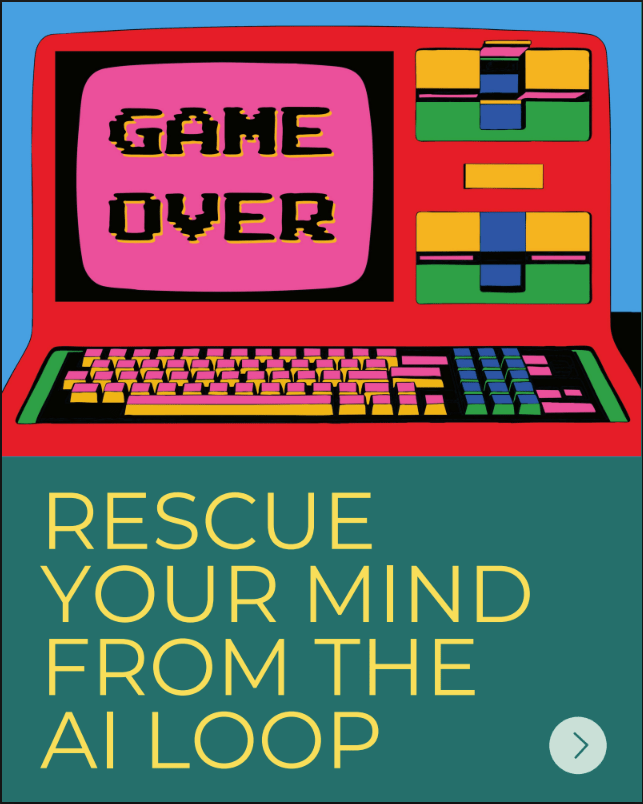
AI and technology are now part of our collective consciousness as we journey through an algorithm-driven world. At every turn, there are dopamine hits and a design that keeps us scrolling with minimal effort, but it takes a toll on our mental health. To describe this new intersection of AI and the human mind, we have coined several terms, as I wrote in my previous posts.
Picture this ! It’s 2AM. You’re on the ‘Gram, scrolling away through unending reels. It feels terrific. You look at the clock and decide – just one more reel. And before you know, it’s 3AM. You gingerly tuck yourself in bed, promising yourself to sleep early next time. Everyday.
Relatable?
It’s time you welcome “Cognitive Behavioural Therapy” to your life. CBT is a fancy term for a structured, goal-oriented form of therapy that focusses on the relationship between thoughts, feelings and actions to help us develop healthier coping mechanisms. It is the actual deep rooted science behind the popular buzzword “Dopamine Detox”.
“Dopamine” is a feel good hormone, that plays a role as the “reward centre” and in many body functions, including memory, movement, motivation, mood, attention and more. High or low dopamine levels are associated with diseases including Parkinson’s disease, restless legs syndrome and attention deficit hyperactivity disorder (ADHD).
CBT techniques are highly effective in breaking the “dopamine loop”—the cycle of impulsive, pleasurable, and often habit-forming behaviours (like doomscrolling, gaming, or excessive snacking) that hijack the brain’s reward system.
While some find the AI/tech intervention in mental health useful to relieve stress and loneliness, others consider it a trigger that sends them spiralling into anxiety. If AI+ tech is your go-to for everything and it’s impacting your mental health, here are some ways to remedy Dopamine Detox that (also see the carousel):
📵One way to address the challenge is via digital detox or creating a forceful break in the system/adding friction. For instance, you can pause or limit notifications for a specific duration, opt for a scheduled uninstall, or force stop some of the social media apps.
🧘According to Cleveland Clinic, here are the five steps you can take to break out of that habit you’ve been trying to wiggle out of:
- Decide what you’re changing: Pick an activity or substance that you know has a bit of a hold on your life that you want to overcome.
- Set up your experiment: Decide the amount of time you want to spend abstaining from the activity or substance. For starters, it could be as simple as deciding to stop scrolling on your smartphone 30 minutes earlier at night.
- Find a replacement activity: This is the clincher – here’s where you add a “healthy” incentive that’s pleasurable in place of the activity you’re abstaining from. Sleep earlier (trust me, it feels terrific!), take a walk outdoors, listen to music, or just spend time interacting with others. The list is endless and entirely depends on your choices and perspectives.
- Have a keen eye: Pay attention to the triggers that urge you to participate in the stimulus. Was abstaining easy? Is stepping away causing extreme amounts of anxiety or frustration?
- Figure out your next step: Once you’re done with your experiment, decide if it was successful. Should it continue? Or does it need a tweak to get to your desired outcome?
🏃At an onboarding session at my son’s school, teachers requested parents and children to regulate their screen-time exposure. They suggested taking up a project or activity like drawing or singing along with fitness as a key element. This can go a long way in building physical and mental fortitude and preparing students for real-life races, like board exams.
📖According to author Cal Newport, reading could be a good cardio equivalent for our ailing brains. Consuming a few dozen book pages a day should be the new 10k daily steps to maintain cognitive fitness, he wrote in an essay in the New York Times. Sounds like a good remedy to combat doomscrolling and AI brain fry.
🤖That said, innovations should also centre on better use of AI as a mental health tool, given the ease of access to it. Chatbots can help us better understand the symptoms of anxiety/depression, guide us on handling stress through Cognitive Behavioural Therapy, and give us vital information on where to seek help.
AI/tech needs to be used more intentionally, rather than compulsively. A blanket ban isn’t possible or necessary. The goal should be to use tech for gaining knowledge or doing the grunt work, while not losing track of the importance of human interactions, critical thinking and cognitive fitness.
#ArtificialIntelligence #MentalHealth #AI #DigitalDetox #CognitiveFitness


 Everyday Reflections
Leave a comment