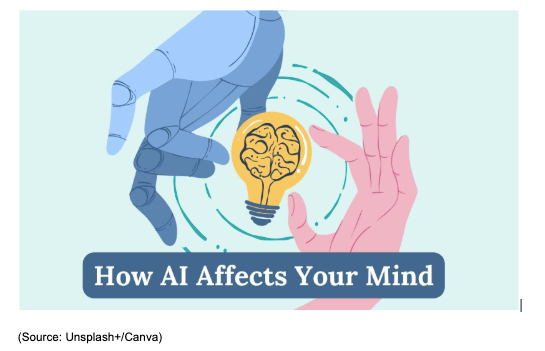
AI’s now part of our daily lives as a colleague, the friendly chatbot who helps resolve queries, a study buddy to aid with test prep, and a life coach to guide us.
It’s even reshaping our mental health. Words like ‘AI Brain Fry’ and ‘AI Companionship’ are now part of our conversations, as I wrote in a previous post.
But, what led to AI influencing us to this extent?
🧑💻Organisations are now excessively relying on machines. While it’s logical to replace manual work with automation as it saves time, cost and effort; a one-size-fits-all approach spells disaster. Not all companies have the need for it, and many lack ready data or trained staff to monitor the process.
Overautomation can actually end up making a simple task complex and decrease efficiency. Decision-making should be a human + machine collaboration and automation shouldn’t be indiscriminate.
📲 Excessive screen time is driven by AI tools, which can harm mental health by altering dopamine pathways and lead to digital dementia/cognitive decline. Algorithms prioritise engagement and end up showing personalised content that can be scrolled endlessly aka doomscrolling.
Studies have also found links between excess social media use and depression. In a landmark verdict, jurors in Los Angeles found Meta — owner of Instagram, Facebook and WhatsApp — and Google, which owns YouTube, liable for intentionally designing addictive social media platforms and having failed to provide adequate warnings about the potential dangers of their products.
📉 Learned helplessness or skill erosion happens as people keep turning to AI for solutions. Eventually, we become passive and dependent, leading to cognitive decline and reduced critical thinking/problem-solving skills.
AI can hallucinate, and if the user isn’t aware of this, they can take what it says as fact and end up making errors.
💔Loneliness is a major challenge of our times. There are various apps that seek to fill the void and monetise loneliness. If designed well, such tools can act as a stopgap measure. However, as AI lacks empathy, it can fail to detect the risk of self-harm.
🏢 Every second news report today hints at job loss from AI. The fear and state of heightened tension can cause stress, anxiety, and burnout. It can also result in employees “quiet quitting” or giving up on their commitment to work.
To be sure, AI’s effect on mental health is not fully negative or positive. Instead, it magnifies existing vulnerabilities. So, a person with anxiety may be triggered by the negative content the algorithm shows them on loop, while someone seeking Cognitive Behavioural Therapy-related content may feel reassured to learn about tools that relieve stress.
In the next post, we will explore remedies to tackle the mental health challenges we are facing from overuse of AI.
#MentalHealth #AI #ArtificialIntelligence #SocialMedia #Algorithms


 Everyday Reflections
Leave a comment