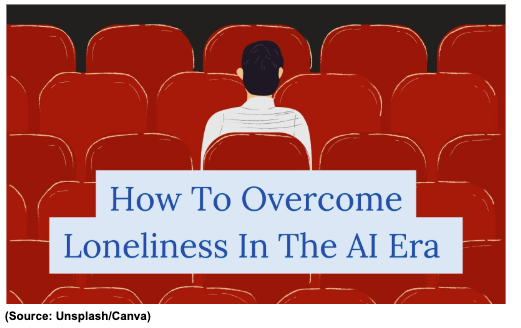
Never before have we been so connected and yet so lonely. We have apps to meet and chat with strangers, chatbots to resolve grievances, and AI for counselling. People are craving connection but dependant on tech/AI for emotional support.
Loneliness is one of the biggest challenges, with 1 in 6 people worldwide affected by it, says the WHO. It has sparked a business model that’s monetising loneliness, as we saw in a previous post.
Tech is being harnessed to develop useful solutions as well, including mental health apps and companion robots that engage in conversations. Johns Hopkins University students have even developed an AI-powered board game that combines NLP + gameplay to engage older adults.
While such measures offer momentary relief, it’s not a long-term solution. AI is programmed to be agreeable, but lacks empathy. It can end up encouraging people to self-harm or give incorrect advice leading to disastrous consequences. People can also become addicted to apps (to the point of digital dementia), it can blur reality, and there are ethical/privacy concerns.
Nothing can substitute for human interaction and lived experience. Perhaps that’s why we are seeing a resurgence of innovative offline groups.
🕺There’s “bhajan clubbing”, which PM Narendra Modi has also spoken of — referring to groups of youngsters coming together to sing devotional songs in a blend of tradition and modernity.
🏃Fitness rave parties are also taking place across India where people meet to exercise/lift weights/go on a run, have protein shakes/energy drinks together, and dance to live DJ music.
These are new-age versions of book clubs and hobby groups where people meet, bond over shared interests, and develop a community beyond work/family.
📲We even face isolation within families as we are caught up in our tech bubbles. To remedy this, in my family we have adopted a non-negotiable level of interaction, and it’s helping.
👪Another concept that’s gaining traction is intergenerational living. For instance, in the UK, affordable housing schemes have elderly residents live alongside college students. In exchange for spending time/going on walks with the elderly, students are charged lower rent. In China, groups of middle-aged/elderly people are opting for shared housing to beat loneliness.
In India, paid services like Aaji Care and The Family Member offer non-medical senior care. A volunteer visits to talk to a senior citizen, accompany them to the doctor/bank/shop or read to them and play board games.
While there won’t be a one-size-fits-all solution, the way ahead is to focus on building communities over profit and acting as a catalyst for people to develop more real-world connections.
#Loneliness #AI #Technology #Community #WHO


 Everyday Reflections
Leave a comment