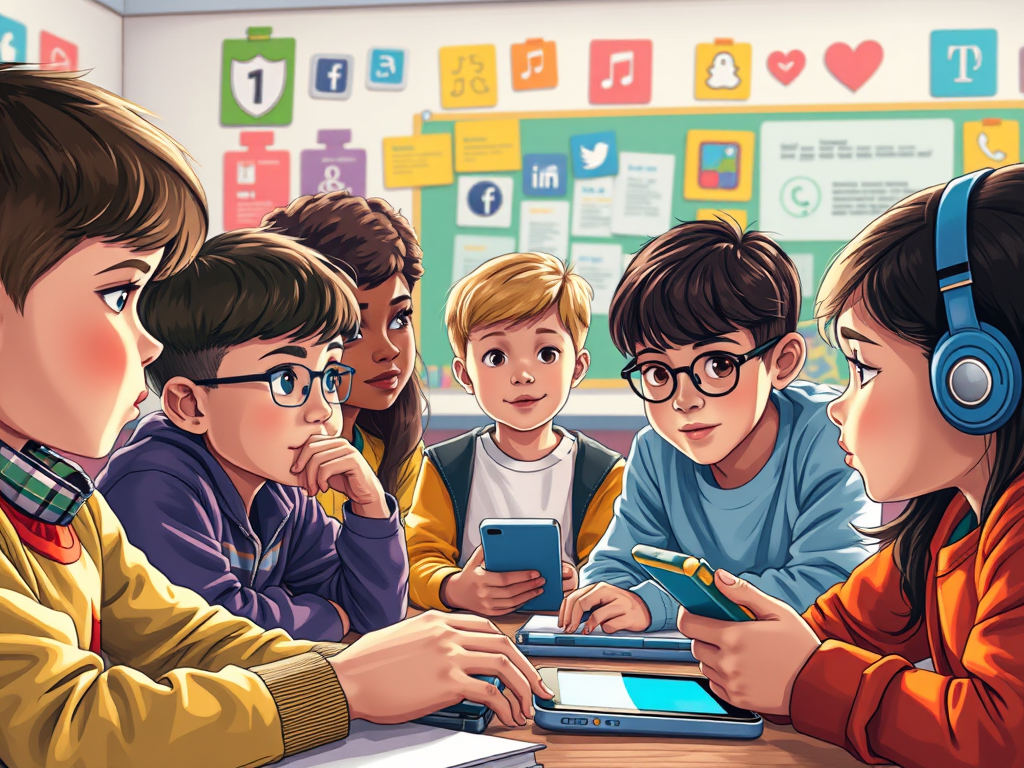
Australia became the first country to recently ban children and teens under 16 from using social media. While there are pros and cons to the policy (you can read in the previous post), a surface-level ban is unlikely to be successful. Think of any recent ban on plastic, alcohol, or books… and you will get the drift.
Instead, let’s consider these measures:
→Children and early teens need to be taught to use digital media wisely, so that they can make smart decisions, even when others aren’t looking. Schools and families need to imbibe ethics and moral science with a goal to help children self-monitor.
Consider this analogy: A bunker can protect you from bombing and war-time atrocities, but it can’t be a permanent shelter. Similarly, a mere ban is not a sustainable deterrent in the long run.
→Children have to be made accountable and responsible for their use of social media. A proactive balancing system like auto switching can prevent overuse.
Parental control software can offer rotating time-based access across apps to prevent binging. For instance, once you exceed the daily session limit for social media, it automatically switches to an alternative, which could be an e-book or educational resource.
→We need to focus on improving reporting mechanisms and the justice system to ensure strict punishment for crimes against children.
→While regulation is important, the focus should be on limiting screen time and making age-appropriate content available. Tech companies can ensure children’s feeds include safe and suitable content sourced from educational networks, which can minimise harmful exposure.
It’s impossible to ban every platform and many are flying under the radar. For instance, Roblox hosts user-made games, which are addictive. Apart from doomscrolling, children are prone to online gaming addiction, which can bring on near-digital dementia (brain fog, concentration issues) and lead to cognitive decline.
Despite multiple lawsuits, such platforms have limited oversight and can expose children to age-inappropriate content and predators.
To be sure, these measures should have been in place all along, but in the quest for profit/revenue/hits, they were conveniently ignored and today, we are seeing a knee-jerk policy reaction.
Everyone wants to protect children. But instead of a ban, policymakers, tech platforms and parents need to treat children as stakeholders. Sustainable long-term measures that factor in children’s psychology, knowledge, and requirements will go much further in tackling this challenge.
What do you think is the best solution in this scenario?
#SocialMediaBan #Teenager #OnlineSafety #Roblox #OnlineGaming


 Everyday Reflections
Leave a comment