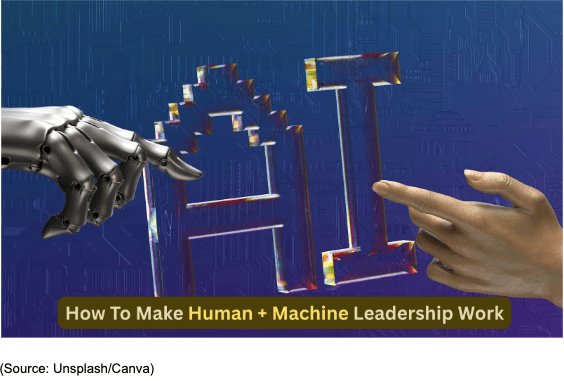
As AI becomes integral to our lives, the future of work is likely to be a hybrid partnership of Humans + Machines. Such a cross-functional team works well for fields like product management, engineering, and data science.
Companies like Amazon, IBM and Accenture show the way by using AI along with human expertise for supply chain efficiency, analytic support and strategy ideation. Indian companies like Paytm, Zomato, and Ola also use it extensively for operations, user experience and customer relationship management.
Leaders in emerging markets are uniquely poised to back the change. There’s abundant skilled labour and resources on offer, while underserved markets offer scope to scale — especially in rural, low-income and regional language segments.
Hybrid team leaders need their own playbook as existing systems may fall short. Optimised workflows, alignment with goals, feedback loops, and localisation for product-market fit in many languages/cultures are crucial. Ethical dilemmas also have to be tackled, including risk of bias and level of autonomy vs control. And leaders will have to master clear communication, making decisions with human + machine inputs, and verify AI output.
The ARM acronym, drawn from management guru Ram Charan’s thoughts on critical thinking, is a good framework to adopt:
🔁Adapt: Embrace change with tenacity and agility.
🚀Rise: Overcome challenges through deep understanding and target root causes.
▶️Move Forward: Apply mental agility in combining solutions and anticipating risks.
Several studies are predicting how the new era will shape up for teams:
💡The future is not human vs machine, as per Gartner. Up to half of the 400 software development teams surveyed by it use Gen AI tools to augment work and enhance efficiency, akin to a force multiplier rather than a replacement for developers.
💡A Harvard Business Review article suggests that leaders should focus on complex decisions that require thinking deeply. Leaders must understand the limitations of AI; it’s a good tool but not a substitute for decision-makers.
💡A research playbook, released by Time magazine’s insights company Charter, recommends “adaptive leadership” for deploying AI. Adaptive problems don’t have a known right approach, and managers lead teams through uncertainty and push for experimentation to find solutions.
💡Midlevel leaders will play a big role by acting as translators of goals into actionable tasks, support AI-related upskilling, and build trust in AI’s potential, according to a Harvard Business Insight study.
You don’t have to wait for drastic changes; start small. The book, titled Hone: How Purposeful Leaders Defy Drift, argues that leaders should treat AI as a tool to experiment with. So, test small-scale applications, monitor outcomes and adjust continuously, and you’ll be on your way.
#AI #HybridTeams #ProductManagement #Leadership


 Everyday Reflections
Leave a comment